
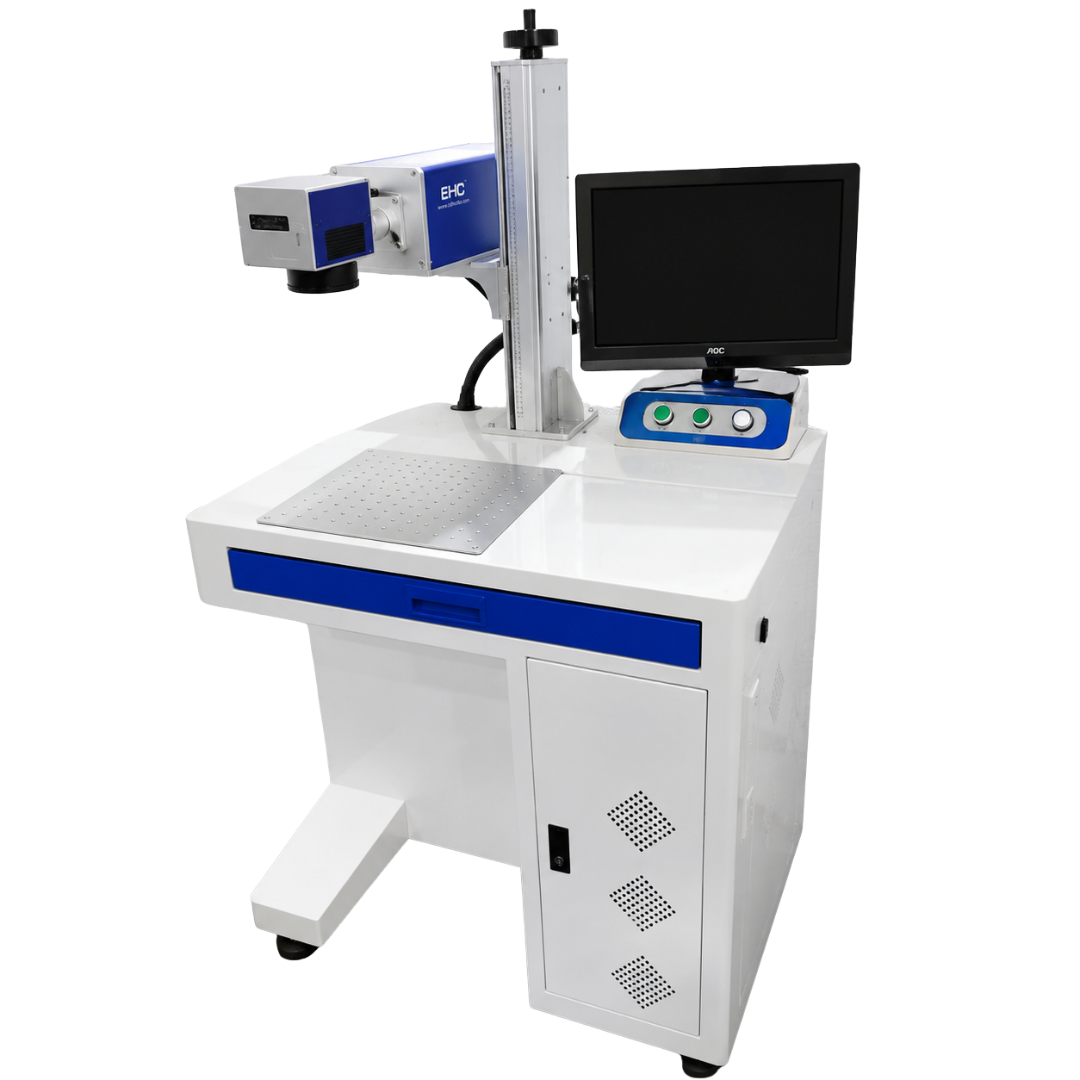
Description
Product Bochure (30w Fiber Laser Marking Machine) PDF
Manufacturer of a wide range of products which include 30w fiber laser marking machine, laser marking system, laser marking machine, laser stone etching machine, mobile cover laser marking machine and 30w fiber laser marking machine.
Product Details:
| Minimum Order Quantity | 1 Piece |
| Laser Machine Type | Fiber |
| Laser Type | Fiber Laser |
| Form Factor | Desktop |
| Etching Material | Metal |
| Machine Type | Semi-Automatic |
| Cooling System | Air Cooled |
| Brand | Raycus |
| Automation Grade | Automatic |
| Marking Area | 150 x 150 mm |
| Marking Depth | up to 1mm |
| Marking Speed Capacity | 10000 mm/s |
| Laser Power | 30W |
| Usage/Application | Metal Marking and Engraving |
| Offering Laser | Metal |
| Country of Origin | Made in India |
svlasers manufacturer of 30W Fiber Laser marking machine with MAX, Raycus, JPT Laser Source. Laser marking is a method that employs a focused light beam to etch permanent marks on various surfaces. This technique is versatile, with different types of lasers like Fiber, pulsed, continuous wave, green, and UV—each suited for specific materials. Fiber lasers excel in marking metals, while CO2 lasers are optimal for non-metals. UV lasers are particularly useful for creating fluorescent marks on materials with low heat tolerance, such as soft plastics. Additionally, MOPA (Master Oscillator Power Amplifier) lasers offer flexibility, allowing for colour marking on stainless steel and black marking on anodized aluminium.
Laser marking has a wide range of applications across various industries due to its ability to create permanent, high-quality marks on a variety of materials. Some of the key applications Include:
1. Manufacturing and Automotive: Laser marking is used to engrave serial numbers, barcodes, and logos on automotive parts, tools, and machinery. It ensures traceability and authenticity in the supply chain.
2. Electronics: In the electronics industry, laser marking is used to mark circuit boards, semiconductors, and electronic components with precise and small-scale markings that are resistant to wear and chemicals.
3. Medical Devices: Laser marking is employed to mark medical instruments and implants with biocompatible and sterilizable markings. It provides a way to comply with regulatory requirements for traceability and patient safety.
4. Aerospace and Defence: For aerospace and defence applications, laser marking is used to mark parts with identification codes, serial numbers, and other critical information that must withstand harsh environmental conditions.
5. Consumer Goods: In the consumer goods sector, laser marking is used for product branding, packaging, and marking of consumer electronics, jewellery, and other items where aesthetics and durability are important.
6. Food and Beverage: Laser marking can be used to mark expiration dates, batch codes, and other information on food packaging materials without the risk of ink or toner contaminating the product.
7. Pharmaceuticals: The pharmaceutical industry uses laser marking to mark pills, capsules, and packaging with dosage information, lot numbers, and expiration dates, ensuring patient safety and regulatory compliance.
8. Construction and Building Materials: Laser marking can be used to mark building materials such as pipes, valves, and fasteners with identification information that is resistant to weathering and corrosion.
9. Jewellery and Luxury Goods: Laser marking is used to engrave intricate designs, logos, and personalisation on jewellery and luxury items, providing a high-end finish that is permanent and tamper-resistant.
10. Research and Development: In R&D, laser marking is used for prototyping, sample identification, and marking of experimental equipment where precision and durability are crucial.